A few days ago, news broke about a serious crash in a Texas highway construction zone. Multiple cars collided on a rainy morning, causing long traffic delays and plenty of frustration. It wasn’t just another highway story—it reminded everyone how connected detention pond design and safe road construction really are.
When stormwater has nowhere to go, it ends up where it shouldn’t—right on the road. And that can turn an ordinary work zone into a dangerous mess.
The crash that made Texans take notice
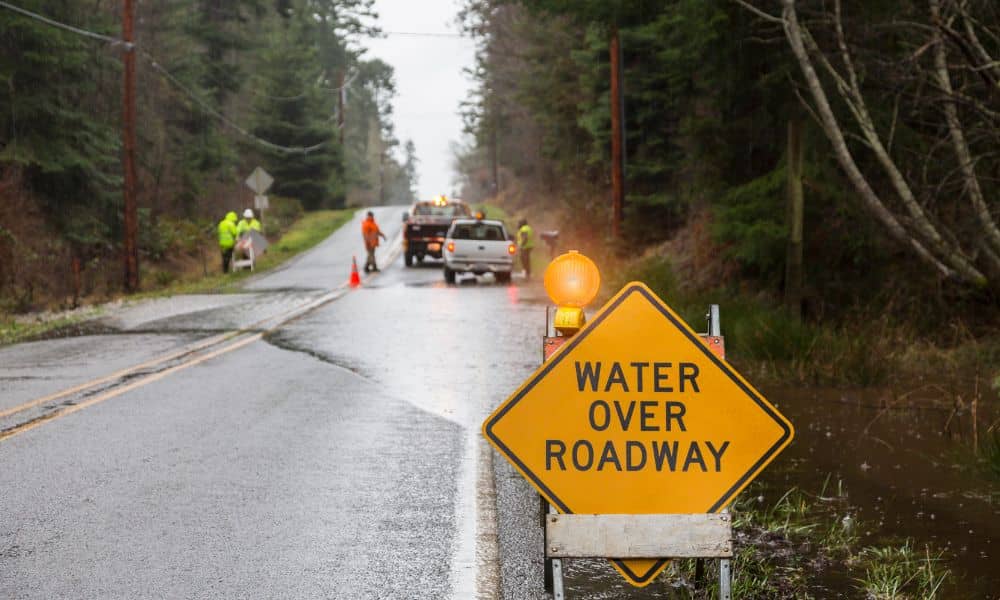
The viral story came from an I-10 construction area where a sudden downpour and poor runoff control turned fresh pavement into a slick trap. Social media lit up with photos of flooded lanes and stranded drivers. The cause wasn’t only the weather. It was the way water moved—or didn’t move—around the site.
That same problem could easily happen closer to home in Waxahachie or Ellis County, where new developments keep popping up near busy roads. The lesson? Every project needs stormwater handled right from the start, and that begins with proper detention pond design reviewed by a licensed civil engineer.
What detention ponds actually do

A detention pond is more than a hole in the ground that collects rainwater. It’s a carefully designed system that controls how fast water leaves your site. Without it, heavy rain can rush straight into nearby streets, flooding work zones or neighbors’ property.
A good design slows down that water, holds it temporarily, and then releases it safely through pipes or channels. When done right, it protects the site, nearby roads, and downstream drainage systems.
But if the pond is undersized, built too shallow, or poorly maintained, it becomes a problem instead of a solution.
Where things often go wrong
Many site owners assume detention ponds only matter at the end of construction. The truth is, temporary drainage during active work is just as critical. When crews are grading roads or laying utilities, soil moves, slopes change, and water paths shift daily.
If a storm hits before the final drainage system is ready, that temporary water can flood lanes, soak materials, and create unsafe driving conditions—exactly what Texas saw in that viral crash.
A licensed civil engineer anticipates these risks. They design both the permanent pond and the interim stormwater plan so that every construction phase stays safe and compliant with TxDOT and local standards.
Why licensed civil engineers make the difference
In Texas, civil engineers carry more than technical know-how—they carry accountability. They understand the local rainfall data (Atlas 14), the clay-heavy soils of North Texas, and Ellis County’s review process.
When they review detention pond design, they look beyond calculations. They think about:
- Runoff direction: Will stormwater move away from travel lanes?
- Phasing: Does each stage of work have its own drainage route?
- Safety: Can heavy rain overwhelm a culvert or slope?
- Regulations: Does the plan meet TxDOT and TCEQ stormwater permits?
That level of oversight can prevent the kind of flooding that led to the recent crash. More importantly, it protects your investment and reputation as a responsible builder or developer.
Lessons for builders and developers
Waxahachie sits at a unique point between growth and preservation. The city is expanding fast along I-35E and Highway 287, yet much of its terrain still has older drainage systems built for smaller storms. Combine that with frequent downpours, and detention pond design becomes one of the most important steps in any site plan.
Even a one-acre retail pad can affect how water flows through an entire neighborhood. That’s why local reviewers often require detention even for smaller projects. A professional engineer can help balance land use, aesthetics, and drainage so your site works in both wet and dry seasons.
How small details create big impacts
Think of a detention pond like a traffic light for water. It slows things down so everything flows in order. One wrong setting, though, can cause chaos.
If the pond outlet is too small, water backs up and floods work zones. Too large, and downstream areas get overloaded. If the pond isn’t maintained, silt builds up, reducing capacity. These mistakes don’t just cause erosion or property damage—they create real safety hazards for drivers and workers.
A licensed engineer catches these issues before they turn into news headlines. They run simulations, test flow routes, and confirm that the design works even during Texas-sized storms.
What the recent crash taught the industry
The I-10 incident made clear that stormwater design and traffic control are not separate topics. They are two sides of the same coin. Poor drainage leads to hydroplaning, and poor traffic management makes it harder for crews to fix the problem safely.
Across Texas, agencies are now revisiting their drainage and temporary stormwater plans for active work zones. For local developers, that’s a good reason to double-check your own designs before construction season ramps up again.
Why a review is worth every penny
Some project owners hesitate to pay for another round of engineering review. But the cost of skipping it can be much higher. Re-grading after a flood, replacing eroded pavement, or facing delay penalties easily exceeds what a proper design check would have cost.
Beyond money, a professional review gives peace of mind. You know your detention pond will perform, your permits stay valid, and your site will drain the way it should—even in the middle of a downpour.
Moving forward safely
The next time you drive past a construction zone after heavy rain, notice where the water goes. Does it drain off smoothly, or does it sit in puddles near barriers and cones? Those small details tell you whether the site had a solid stormwater plan or not.
If you’re managing a development, don’t wait for a headline to highlight a design flaw. Talk to a licensed civil engineer early, let them review your detention pond design, and make sure your site is built to handle weather the right way.