
If you ordered an ALTA land title survey recently, you probably assume everything is moving forward. The property hasn’t changed. The boundaries remain the same. The buildings still sit where they always have. So how could anything already be outdated?
Surprisingly, the issue may not be on the land at all. Instead, it may be inside the proposal.
Recently, the national ALTA/NSPS standards were updated. While that may sound technical, it directly affects active commercial real estate transactions. Many survey proposals still reference older standards. As a result, lenders and title companies may question or reject documentation that does not match the current version.
A Quiet Change With Real Impact
Standards updates do not always make headlines. However, they shape how an ALTA land title survey must be prepared and certified.
When standards change, survey firms update templates and certification language. Still, that adjustment does not happen everywhere at the same time. Some proposals continue using older wording, especially during transition periods.
At first glance, this may seem minor. After all, the property itself hasn’t moved. However, title companies review compliance carefully. If the proposal references outdated standards, they may require revisions before accepting the final survey.
Even small paperwork changes can slow a closing.
Where “Outdated” Usually Shows Up
Most clients focus on the map, measurements, and boundaries. However, proposal language controls how the survey meets national requirements.
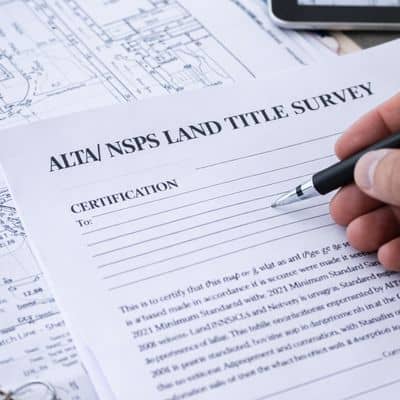
The first place to check is the standard reference line. Every proposal states which ALTA/NSPS standards govern the work. If that line references an older version, the survey may not align with current expectations.
Next, review the certification language. An ALTA land title survey includes a certification page that names the parties who rely on it, such as the buyer, lender, and title company. When standards update, certification wording often changes as well. If the language does not match current formatting, lenders may request corrections.
Finally, optional items must match the correct version. If the proposal lists optional items under one standard while the current standard uses updated numbering or wording, confusion can follow. Although these differences appear small, lenders rarely overlook them.
Why This Can Delay a Closing
Now consider how this plays out in real life.
Imagine you are under contract for a commercial property. You order your ALTA land title survey during due diligence. The survey team completes fieldwork and begins drafting.
Then the title company reviews the documentation and notices that the proposal references older standards.
At that point, revisions become necessary. The survey firm may need to update certification wording. The lender may request written confirmation of compliance. The title company may pause approval until changes are complete.
Nothing changed on the ground. Still, the paperwork must align with current rules before closing can move forward.
When deadlines approach, even a few extra days feel stressful.
The Timing Question That Creates Confusion
Another issue has surfaced during this transition. Which standards apply?
Does the applicable version depend on the date the purchase contract was signed? Or does it depend on when the survey proposal was accepted? Some parties focus on when fieldwork began.
Because different teams interpret timing differently, transactions sometimes stall while everyone confirms which version controls the survey.
This confusion did not exist before the update. Now it requires clear communication early in the process.
Why Lenders and Title Companies Are Strict Right Now
Lenders rely on an ALTA land title survey to reduce risk. They use it to confirm legal descriptions, identify recorded matters, and support title insurance coverage.
When standards update, lenders want assurance that the survey meets the newest compliance framework. If documentation references an older version, they may hesitate to approve funding.
Title companies follow the same approach. They want a clean, current certification language that aligns with national standards. As a result, they review proposals more closely during this transition period.
In short, everyone involved wants to avoid liability.
The Land Hasn’t Changed — But Compliance Has
It may feel frustrating. After all, the property boundaries remain the same. The improvements still exist. The survey crew measured accurately.
However, compliance lives in documentation. An ALTA land title survey must follow the current standards to provide the protection lenders expect. If the paperwork does not match those standards, the survey loses part of its intended purpose.
Accuracy on paper matters just as much as accuracy in the field.
How to Protect Your Transaction
Fortunately, you do not need deep technical knowledge to avoid problems. Instead, review your proposal before work begins.
Confirm that the proposal references the current ALTA/NSPS standards. Verify that certification language matches what your lender expects. Make sure optional items align with the proper version. Also, ensure the title commitment will be incorporated into the final survey.
If you already accepted a proposal, communicate with your survey firm. If fieldwork has not started, updating the scope usually solves the issue quickly. If drafting has begun, revisions may still be possible without major disruption.
Most importantly, coordinate with your lender and title company early. Clear communication reduces surprises later.
Why This Matters for Active Commercial Deals
Commercial real estate moves quickly. Buyers line up financing. Sellers prepare documents. Attorneys track deadlines carefully.
In that environment, small administrative details can create major friction. Because standards recently changed, proposal language now receives closer review.
Therefore, proactive verification protects your timeline. A simple conversation today can prevent amendment fees and closing stress tomorrow.
Final Thoughts
An ALTA land title survey plays a central role in commercial transactions. It supports lenders, protects buyers, and strengthens title insurance coverage. However, it must align with current national standards to serve that purpose fully.
Right now, proposal language sits under greater scrutiny. Although the land itself remains unchanged, compliance requirements have evolved.
Before you assume everything is fine, take a moment to review your survey proposal. That small step can keep your deal moving forward smoothly and protect your investment from avoidable delays.