
Dallas is not just growing. It is upgrading. In 2026, cranes will fill the skyline. Highways expand. Airport terminals grow. New warehouses rise along major roads. However, behind all that progress sits something most people never see: data. More specifically, LiDAR mapping.
While concrete and steel shape the city, LiDAR mapping builds the digital base. And today, that base matters more than ever.
Dallas Is Building Smarter, Not Just Bigger
Dallas–Fort Worth remains one of the fastest-growing metro areas in the country. Because of that, city leaders and developers face real pressure. They must design roads that handle more traffic. They must upgrade airports without slowing travel. They must improve utilities while neighborhoods stay active.
So, basic maps no longer work.
Instead, planners now use detailed 3D models of roads, bridges, and large sites. This shift changes everything. Growth now depends on clear digital data, not guesswork.
And that is where LiDAR mapping plays a key role.
Why LiDAR Mapping Matters in 2026
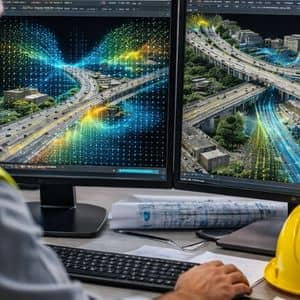
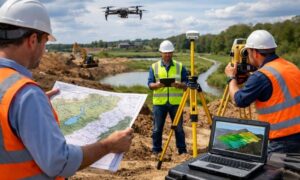
LiDAR stands for Light Detection and Ranging. It sends laser pulses from aircraft or drones to scan the ground and buildings. Then, it turns those readings into detailed 3D models.
However, in 2026, LiDAR mapping does much more than show land height.
Today, Dallas agencies and engineers use it to build “digital twins.” A digital twin is a virtual copy of real infrastructure. Because of that, teams can test ideas, study traffic flow, and review plans before spending money.
In simple terms, LiDAR mapping helps Dallas plan first and build second.
Transportation Projects Now Start in 3D
Dallas depends on highways, freight routes, and rail lines. Therefore, transportation upgrades need careful planning.
Instead of relying only on field crews, engineers now scan entire corridors using LiDAR mapping. They capture road shape, bridge details, and nearby features in one 3D model.
Because of this clear view, planners can:
- Spot tight clearances
- Plan lane expansions
- Track surface changes
- Fix design issues early
Also, LiDAR mapping helps update data fast. That speed supports large highway projects that move in phases.
Rather than redesigning sections later, engineers start with strong data from day one.
DFW Airport and Logistics Hubs Need Precision
Airports run all day and night. So, delays cost money.
For that reason, LiDAR mapping supports airport upgrades in a big way. Engineers scan runways, terminals, and cargo areas with high detail. Then, they compare scans over time to watch for changes.
This method helps find surface wear or alignment issues early. As a result, crews fix small problems before they grow.
Likewise, large distribution centers across Dallas use LiDAR mapping to study yard layouts and truck movement. Since these sites move goods nonstop, precision matters.
Better data means fewer delays.
Infrastructure Maintenance Is Becoming Predictable
In the past, cities reacted to damage. A crack showed up. A bridge shifted. A road dipped.
Now, Dallas aims to prevent those problems.
LiDAR mapping supports this new approach. Engineers scan bridges and roads on a regular schedule. Then, they compare the data to spot small changes over time.
Even tiny shifts appear in the models. Because of that, managers act early.
Instead of guessing when to repair something, they use real numbers.
This saves money. More importantly, it keeps people safe.
Utilities Need Better Coordination
Dallas continues to upgrade water, sewer, and power systems. However, these systems often sit under busy streets.
So, careful planning matters.
LiDAR mapping captures detailed surface data. When teams combine that with utility records, they see a full picture.
As a result, engineers reduce conflicts between new projects and older systems. They also improve records for future work.
Better coordination leads to smoother upgrades.
2026 Marks a Big Change
Several factors push this shift forward.
First, public agencies expect digital models that work with mapping software. Second, developers want faster project timelines. Third, funding programs demand clear documentation.
Because of that, firms working in Dallas must provide strong spatial data.
LiDAR mapping no longer feels optional. Instead, it forms part of the main plan.
Companies that understand large-area scanning and digital modeling gain a clear edge.
What Clients Should Think About
If you plan a project this year, look beyond equipment.
Choose teams that understand large infrastructure sites, not just small lots. Also, confirm their data works with your GIS or design software.
Ask about quality control as well. Big projects need steady, reliable data across wide areas.
Finally, work with providers who understand standards and public works rules.
Because infrastructure lasts for decades.
Dallas Is Building for the Future
Dallas’ expansion in 2026 shows more than growth. It shows a move toward smarter infrastructure.
Roads, airports, warehouses, and utilities now rely on digital planning from the start. And that planning begins with LiDAR mapping.
Most people may never see the scanning aircraft or drones overhead. Still, they feel the results every day. They drive on smoother roads. They move through better airports. They depend on steady utilities.
Behind each improvement stands clear, accurate data.
As Dallas builds the next chapter of its growth, one thing becomes clear.
Strong infrastructure begins with strong information.