Buying land near proposed data centers without an ALTA survey is a costly mistake. In Bryan, Texas, where AI infrastructure investment is accelerating fast, what you do not know about a parcel can stop a project cold. Easements, power corridors, boundary conflicts, and title issues can surface after closing and kill your return on investment. An ALTA survey puts those risks on the table before you sign.
Understanding Why Data Center Developers Target Specific Land Parcels
AI and cloud companies do not pick land at random. They follow infrastructure.
In Texas, that means:
- High-capacity power access. Data centers need megawatts. They target land near transmission substations and ERCOT grid interconnection points.
- Fiber connectivity. Proximity to existing dark fiber or carrier-neutral access points reduces build cost.
- Transmission corridors. Large utility rights-of-way that cross or border a parcel signal grid proximity.
- Contiguous acreage. These facilities need room. Developers look for clean, large parcels without fragmented ownership.
Bryan sits in the Brazos Valley corridor with ties to College Station and Highway 6 infrastructure. That makes it a real target for data center site selection.
When a company locks in a site, the land around it becomes valuable fast. That is where developers and investors start paying attention.
How Proposed Data Center Projects Can Change Land Value Overnight
A project does not need to be built to move the market.
Once a data center announcement hits, neighboring parcels get attention from:
- Speculative land buyers
- Utility companies planning expansion
- Local governments reviewing zoning
- Title companies and lenders tightening requirements
Rezoning pressure builds quickly. Land that was zoned agricultural last year may be facing industrial reclassification this year. That changes what you can build, what you can finance, and what your exit looks like.
In fast-moving corridors like Bryan-College Station, early buyers can capture value before pricing adjusts. But speed without due diligence is just a risk. Parcels near planned infrastructure often carry hidden legal encumbrances that do not show up in a standard survey.
What an ALTA Survey Reveals That Standard Surveys Often Miss
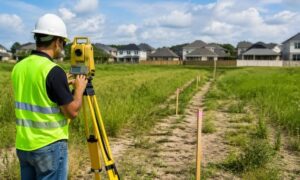
A standard boundary survey tells you where the lines are. That is a starting point, not a full picture.
An ALTA/NSPS survey goes further. It is the only survey type that brings together boundary data, title report findings, and on-the-ground conditions into one document.
Here is what an ALTA survey uncovers that a standard survey typically does not:
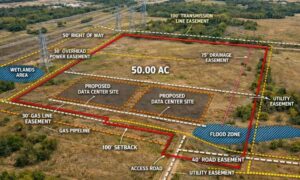
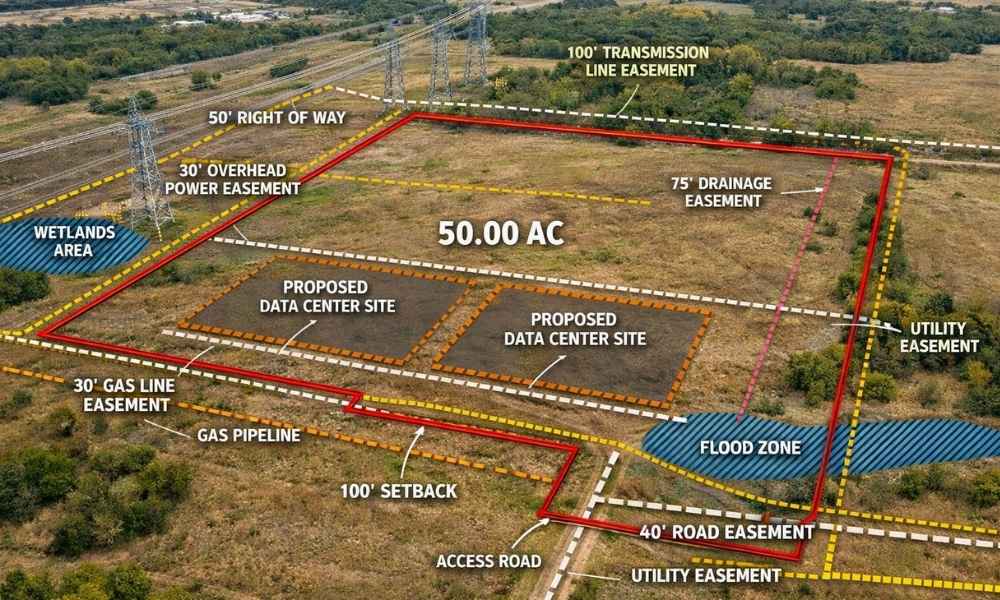
- Recorded and unrecorded easements. These include utility easements, drainage easements, and access easements that may not appear in a basic boundary review.
- Rights-of-way. Roads and utility corridors that cross or adjoin the parcel.
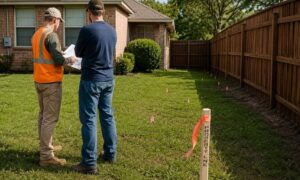
- Encroachments. Fences, structures, or improvements that cross a boundary line.
- Access confirmation. Legal access to a public road is not always guaranteed. An ALTA survey verifies it.
- Setback and zoning overlap. Building restriction lines that limit usable land area.
- Wetlands and floodplain indicators. Not a replacement for an environmental study, but flags are visible.
Near a data center corridor, every one of these items carries financial weight. An easement that cuts across a parcel may prevent you from building the structure you planned. An encroachment may delay closing or trigger a title dispute.
Why Utility Easements and Power Corridors Matter More in Data Center Zones
Data centers are power-hungry facilities. A single large data center can draw 100 to 500 megawatts or more. That power has to come from somewhere, and it has to travel across the land to get there.
Transmission lines and utility corridors create permanent easements. Those easements stay with the land. They transfer at closing.
What that means for nearby parcels:
- Restricted build zones. Easement holders can prohibit construction within a set distance of a line.
- Limited surface use. Some easements restrict grading, excavation, or even tree planting.
- Access rights for utility crews. Easement holders may have the right to enter the property without notice.
- Reduced usable land area. A large utility corridor can remove a significant portion of what you planned to develop.
In Bryan and surrounding Brazos County, new transmission infrastructure tied to grid expansion is already visible. If a data center project triggers substation upgrades or new lines, adjacent parcels will feel the easement pressure.
An ALTA survey identifies where those corridors sit on or near your parcel before you close. That lets you negotiate, walk away, or price the risk.
Risk Protection for Buyers in Fast-Growing Texas Tech Corridors
Texas has no shortage of land deals that looked clean on the surface and fell apart in due diligence.
In a data center corridor, the risks are more concentrated. Here is what an ALTA survey protects against:
- Boundary disputes. Neighboring owners, especially near active utility corridors, may have conflicting claims.
- Restricted land use. Deed restrictions or easement agreements may prohibit industrial use entirely.
- No legal access. A parcel with no confirmed access to a public road cannot be financed or developed.
- Title defects. Gaps in the chain of title or unresolved liens that could cloud ownership.
- Closing delays. Lenders and title companies increasingly require ALTA surveys for commercial transactions. Finding an issue after the commitment letter is issued creates expensive delays.
Most commercial lenders require an ALTA survey before issuing a loan commitment on any significant land acquisition. If your lender does not require one, your title company likely will.
But beyond the lender requirement, the ALTA survey is protection for you. It is the document that tells you what you are actually buying.
Frequently Asked Questions
What makes ALTA surveys important near proposed data centers?
ALTA surveys provide a detailed view of legal boundaries, easements, and site restrictions. In high-value, infrastructure-heavy developments like data center corridors, those details directly affect what you can build, where you can build, and how much usable land you actually have.
Do data center projects affect surrounding property even if they are not built yet?
Yes. Even proposed projects influence zoning pressure, utility planning, and investor interest. That affects land use expectations and pricing well before a shovel hits the ground.
What risks can an ALTA survey uncover before purchasing land?
It can reveal hidden easements, access limitations, encroachments, and title-related issues. Any of these can restrict development, reduce usable land area, or delay or kill a closing.
Why are easements important near data center developments?
Data centers rely on transmission lines, fiber networks, and utility corridors. Those systems create permanent easements across nearby land. They limit what you can build and where, and they transfer to new owners at closing.
Is an ALTA survey required for all land purchases?
Not always required by law. But lenders and title companies commonly require it for commercial or high-value transactions. Even when not required, it is the most reliable way to understand what you are buying before you close.