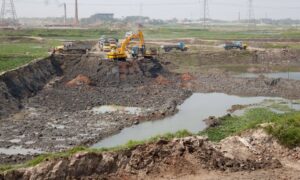
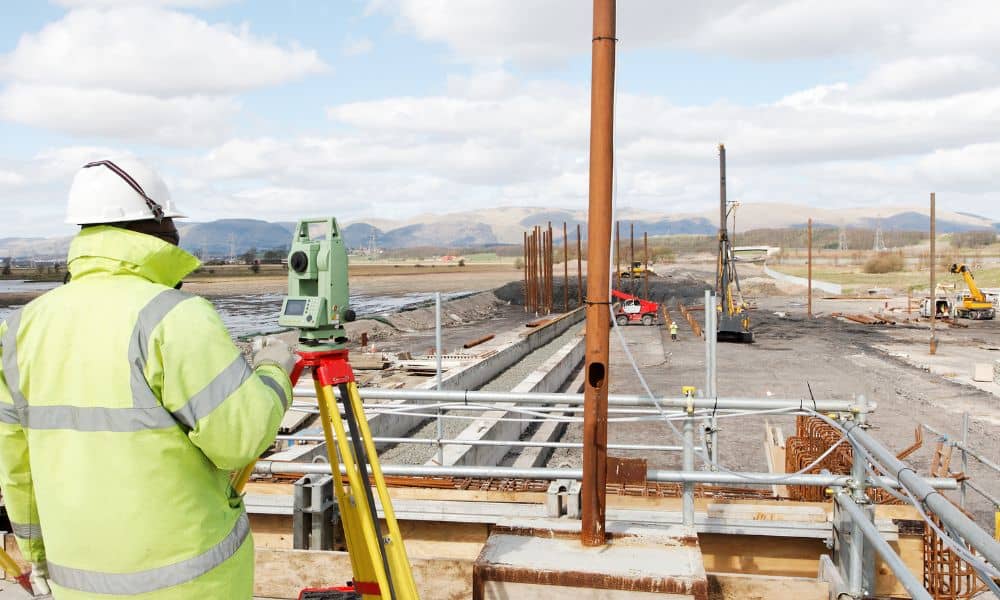
Mesquite is growing fast. New retail centers are rising near major roads. Warehouses are expanding. Subdivisions continue to stretch farther east. Because of this growth, every serious build now starts the same way — with a construction survey.
Years ago, some developers treated surveying like a small step before pouring concrete. Today, that mindset creates expensive problems. Materials cost more. Labor costs more. Lenders watch projects closely. As a result, mistakes cost far more than they used to. A construction survey sets the direction before the first machine touches the ground.
Growth in Mesquite Leaves No Room for Error
Construction activity in Mesquite has increased steadily. Commercial pads, new schools, multi-family buildings, and industrial projects all compete for crews and timelines. Meanwhile, contractors work on tight schedules. They cannot afford delays.
Because projects move quickly, small errors grow into large ones. For example, if a slab sits just a few inches off its planned location, setbacks may fail. Parking counts may shift. Drainage slopes may no longer meet code. Then crews must tear out and redo work. That costs money and damages reputations.
Therefore, builders now rely on accurate layout from day one. A construction survey ensures the building goes exactly where the engineer designed it.
What a Construction Survey Really Does
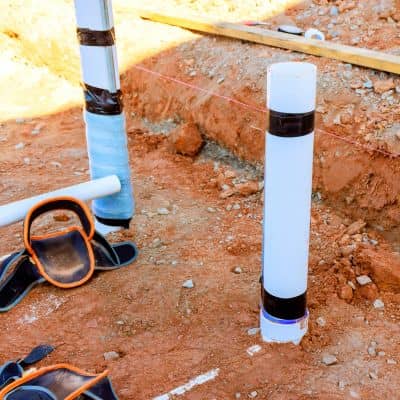
Many property owners think all surveys do the same thing. However, that is not true. A boundary survey marks property lines. A topographic survey shows elevation and contours. In contrast, a construction survey actively guides the build.
A construction survey controls:
- Building footprint location
- Finished floor elevation
- Utility placement
- Road centerlines
- Stormwater flow direction
- Parking lot grades
In simple terms, it turns paper plans into physical points on the ground. Without those points, crews guess. And guessing on a commercial project creates risk.
Costs Are Higher — So Precision Matters More
Construction costs have risen across North Texas. Concrete, steel, fuel, and labor all carry higher price tags. Because of that, rework hurts more than ever.
For instance, imagine a warehouse slab poured six inches too high. Now drainage flows toward the building instead of away from it. Crews must regrade the site. They may need to adjust storm lines. That single mistake can cost tens of thousands of dollars.
On the other hand, a construction survey checks elevations before the pour. Surveyors verify control points. They confirm benchmark data. They stake exact heights and offsets. As a result, crews build with confidence.
That confidence saves money.
Developers Want Fewer Surprises
Developers face pressure from lenders and investors. Banks release funds in stages. Inspectors review progress. Engineers certify compliance. Therefore, projects need clear documentation at every phase.
A construction survey provides proof. Surveyors document building corners, utility depths, and finished grades. Later, if questions arise, the survey record shows what happened and when.
This matters more than most people realize. Disputes between contractors and owners often center on placement. Who set the corner? Who verified the elevation? A licensed surveyor answers those questions with recorded data.
Consequently, many developers now schedule their construction survey before finalizing contractor mobilization.
The Five Key Phases on a Mesquite Job Site
A construction survey does not happen once. Instead, it supports the project from start to finish.
First, surveyors establish control points across the site. These fixed references guide all future work. Next, they stake clearing limits and rough grades. After that, they mark building corners and structural lines.
Then comes utility staking. Water, sewer, and storm lines require precise alignment. Crews must follow design slopes exactly. Surveyors verify those slopes before backfilling.
Finally, surveyors perform as-built checks. They confirm that what crews built matches the approved plans. That final step protects everyone involved.
Each phase builds on the previous one. Because of that, skipping early staking often leads to larger corrections later.
Clay Soils and Drainage Raise the Stakes
Mesquite, like much of North Texas, sits on expansive clay soils. These soils swell when wet and shrink when dry. Therefore, elevation control becomes critical.
If a finished floor elevation sits too low, heavy rain can push water toward the structure. If parking lots slope incorrectly, puddles form. Over time, standing water damages pavement and foundations.
A construction survey verifies slopes before asphalt and concrete lock them in place. Surveyors check subgrade elevations. They confirm that drainage flows toward approved discharge points. That early verification prevents long-term headaches.
Construction Survey vs. “We Already Had a Survey”
Some clients say, “We already had a survey done.” Usually, they mean a boundary or topo survey. While those surveys matter, they do not guide active construction.
A boundary survey shows property limits. It does not stake foundation corners. A topo survey shows existing ground. It does not verify slab height during the pour.
A construction survey stays involved during the build. It marks real-world positions repeatedly. Therefore, it acts as quality control throughout the project.
Understanding that difference helps owners avoid confusion and costly shortcuts.
When Should You Schedule a Construction Survey?
Timing matters. Ideally, you schedule your construction survey before site clearing begins. That way, surveyors can establish accurate control from untouched ground.
Next, schedule staking before grading. Then confirm layout before utilities go underground. Finally, request as-built checks before final inspections.
If you wait until problems appear, costs increase quickly. However, early coordination creates smoother progress.
Why Mesquite Projects Now Start Here
Mesquite’s growth shows no signs of slowing. Commercial corridors continue to expand. Residential development pushes outward. At the same time, budgets remain tight and schedules stay aggressive.
Because of that reality, accuracy now drives success. A construction survey protects your investment. It supports your engineer. It guides your contractor. It documents your compliance.
Most importantly, it prevents mistakes that cost far more than the survey itself.
In today’s construction climate, builders no longer treat surveying as an afterthought. Instead, they start with it. If you plan a project— whether a retail strip, warehouse, church expansion, or subdivision — begin with a construction survey.
Before concrete. Before framing. Before utilities.
Start with precision.