
If you’ve spent any time online lately, you’ve probably seen a viral story about two neighbors fighting over a backyard fence. One of them ordered a property line survey, and everything went downhill fast. The survey showed the fence wasn’t actually on the right boundary. The neighbor “went nuts,” and the internet exploded over the drama. It’s a wild reminder of how fragile peace can be between neighbors—especially when land and pride collide.
The truth is, stories like this are becoming more common, especially in growing cities like McKinney, Texas. New homes rise beside older ones. Boundaries shift. Owners change. Paperwork gets lost. Then suddenly, two families are battling over eighteen inches of grass. So today, let’s talk about why something as simple as a property line survey can turn a quiet street into chaos almost overnight.
When a Line in the Dirt Isn’t Actually the Line
Most homeowners believe their fence marks the edge of their land. It feels simple and obvious—but in reality, a fence is often just where the previous owner decided to place it. Many fences went up without checking the deed, the plat, or any survey records.
So when a new owner orders a survey, the truth can be shocking. What they thought was theirs… isn’t. What they assumed the neighbor owned… isn’t. And unlike emotions, land boundaries are not flexible. That’s when trouble starts.
What Actually Happens When a Survey Changes Things

A survey doesn’t create a disagreement—it reveals an old one.
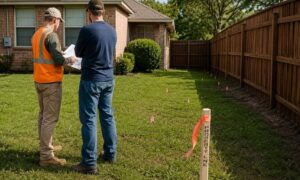
Picture this: A homeowner orders a survey for something routine like a pool, a patio, or a fence upgrade. The surveyor marks the true line with stakes. The owner checks… and suddenly the fence is sitting two feet onto their property. Or worse, their fence is sitting on the neighbor’s land.
Now every fence panel, sprinkler head, hedge, or stone border becomes questionable. And both families feel something important has been taken. That’s how emotions grow faster than weeds.
Why This Happens So Often in McKinney
McKinney has exploded in population over the last two decades. New subdivisions sit beside older neighborhoods. Builders rushed. Landscapers cut corners. Records vary. Some surveys are outdated. Some fences shifted over time.
In a fast-growing city, assumptions age quickly.
And when homeowners discover the truth, frustration erupts long before logic kicks in.
Why Property Lines Matter So Much in Texas
Every inch counts here.
Property taxes are high. Remodels are expensive. Outdoor spaces are valuable. Pools cost a fortune. And resale depends on clean paperwork.
So when a survey shows a homeowner’s lot is smaller than expected, they feel cheated. When a neighbor is told to move a fence, they feel attacked. A property line survey cuts through the tension and shows what is real—not assumed.
How a Small Disagreement Turns Into a War
It usually goes like this:
Awkward questions. Defensive reactions. More assumptions. Tense conversations. Raised voices. Legal threats.
Very quickly, it becomes less about land and more about pride. And pride costs far more than a survey ever will.
The Biggest Misconception Homeowners Believe
People often think time equals ownership. But:
Years of mowing a spot does not make it yours. A fence does not make it yours. “Everyone has always said” do not make it yours.
Only the legal boundary does. And only a licensed surveyor can confirm that.
The Smart Way to Avoid a Future Explosion
Don’t wait for conflict. Prevent it.
The smartest time to order a property line survey is before the big project, before the big spend, before the emotional investment—not after the disagreement shows up.
When stakes are low, conversations are calm. When stakes are high, patience runs out.
Why a Survey Protects More Than Your Land
A survey protects:
Your property value Your future projects Your home investment Your peace of mind Your relationship with neighbors Your resale process
Clarity removes fear, and fear is what ignites disputes.
If You’re in McKinney, Here’s the Good News
You are not alone. Most homeowners do not know where their true boundary sits. Many assume the fence is correct. Most don’t check until something goes wrong.
But in McKinney, getting a property line survey is simple—and often the smartest step you can take before renovations begin.
Final Thought
The viral backyard feud is dramatic, but it contains a warning. Not to scare anyone, but to remind us: don’t assume the old fence is accurate, and don’t wait until emotions take over.
Peaceful neighbors stay peaceful when the boundary is clear.
If you own a home and you’re unsure where your property really ends, schedule a property line survey while everything is still friendly. It may save you thousands—and a whole lot of stress—down the road.