
You submit your plans. You wait. Then the city sends them back. That happens more than people expect. Most delays don’t start during review. They start before the plans even reach the city desk. A good civil engineer knows this. People who are working with a civil engineer early usually avoid those setbacks, because small issues get sorted out before the plans ever go in.
If you plan to build, this part matters more than you think.
Why the Review Happens Before Submission
Plan review is not where problems begin. It is where problems show up.
When plans go in too early, they often come back with comments. Then you revise them. Then you wait again. That cycle can repeat more than once.
Each round costs time. It also costs money.
Because of that, a civil engineer focuses on the work before submission. That is where most issues can be fixed without delays.
Looking at the Full Plan Set First
A civil engineer usually starts with a simple question: is everything here?
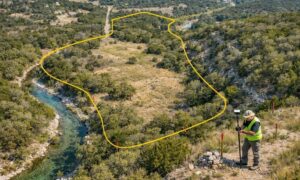
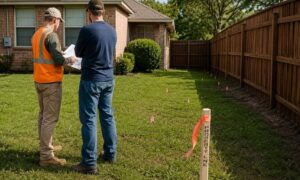
Plans are more than drawings. They need the right sheets, notes, and details. That often starts with an accurate land survey early on, so the plans actually match what’s on the site. If something is missing, the city may not even start the review.
They also check if all the sheets line up. A grading plan can’t say one thing while a utility plan shows something else. Even small gaps can cause confusion.
This is where a lot of projects fall short. Clients often think the design alone is enough, but the full set has to work together for the plans to move forward.
Checking How the Plans Work Together
Different teams often work on the same project. You may have an architect, a civil engineer, and other specialists.
Those plans must line up.
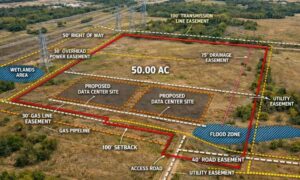
A civil engineer checks for conflicts across all drawings. For example, a building layout might block a drainage path. Or a utility line might run through a planned driveway.
These problems do not show up right away. They show up during review.
Fixing them early keeps your plans from going back and forth.
Reviewing Drainage Details Before the City Sees Them
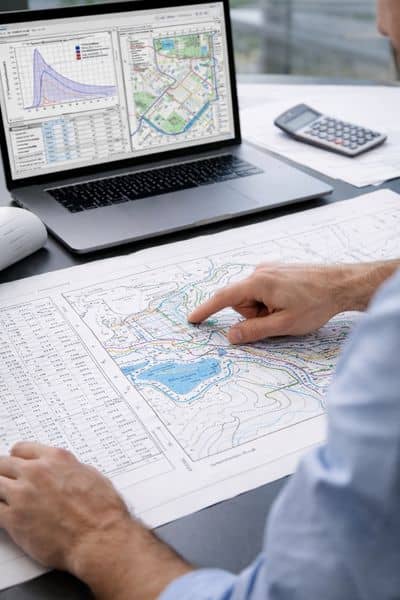
Water control is a big deal in Texas. McKinney looks closely at how your site handles rain.
A civil engineer checks more than just the design. They also review the numbers behind it.
Do the calculations match the drawings? Does the flow make sense based on the site? Is the explanation clear?
If anything feels off, the city will flag it.
That slows everything down.
Clients often think drainage is just a technical step. It is not. It is one of the main reasons plans get comments.
Making Sure Utility Connections Are Ready
Water, sewer, and storm lines must connect to city systems. That sounds simple. It is not.
A civil engineer checks where those connections will happen. They also look at capacity and access.
If a line cannot connect the way it is drawn, the city will ask for changes.
That can mean redesigning part of the site.
Catching that early saves time. It also avoids surprises during construction.
Looking at How the Site Actually Works
Plans are not just drawings. They represent how people will use the space.
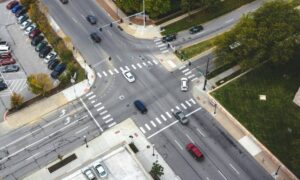
A civil engineer looks at access points, driveways, and movement around the site.
Can vehicles enter and exit safely? Is there enough room to turn? Will anything block visibility?
These questions matter before submission.
If the layout feels off, the city will notice.
Fixing layout issues early keeps your project on track.
Reviewing Supporting Documents
Plans do not stand alone. They need support.
A civil engineer checks if all required reports are ready. This can include studies related to traffic, drainage, or site conditions.
If a document is missing, the city may stop the review.
Even worse, the plans might get returned without comments.
That means you lose time without getting feedback.
Clients often overlook this step. They focus on the drawings and forget the paperwork.
That is a costly mistake.
Checking for Local Compliance in McKinney
Every city has its own rules. McKinney is no different.
A civil engineer reviews the plans against local standards before submission. They look at formatting, details, and design criteria.
Plans from another city will not always work here. Even small differences can cause issues.
Local experience helps avoid that.
This is where hiring a civil engineer who knows McKinney makes a difference.
Common Mistakes That Delay Approval
Many delays follow the same pattern.
Plans go in too early. Details do not match. Documents are missing.
Sometimes the design works, but the submission does not.
Rushing is a big reason this happens. Clients want to move fast, so they send plans before everything is ready.
That move often backfires.
Why Early Review Saves Time
A civil engineer is not just there to design. They are there to catch problems before they grow.
Early review leads to fewer comments. Fewer comments mean fewer revisions. Fewer revisions mean faster approval.
That is how projects move forward.
Waiting until submission to find issues creates delays that are hard to fix.
Getting It Right Before You Submit
Approval does not start when you send your plans.
It starts with the work you do before that moment.
A civil engineer reviews the details that most people do not see. They check how everything connects, how it works, and how it meets city standards.
That work keeps your project moving.
If you plan to build, take the time to review your plans the right way. It is easier to fix problems early than to fix them after submission.
And in McKinney, that difference shows up fast.