
When recent local news reported that San Antonio has more than 7,000 acres of land near future transit corridors, many people saw opportunity. More housing. Less sprawl. Smarter growth. However, developers, investors, and lenders see something else first: risk. Before any of that land can turn into housing, mixed-use projects, or commercial space, it must pass one critical test—an ALTA land title survey.
At first glance, zoning maps and planning overlays make redevelopment look simple. A parking lot appears vacant. A parcel looks large enough. The zoning allows higher density. Yet real projects don’t move forward based on maps alone. They move forward based on what the land legally allows. That difference is where many transit-area projects slow down or stop entirely.
The 7,000-Acre Headline Sounds Simple—Reality Is Not
The idea of “available land” near transit corridors sparked strong reactions across San Antonio. Housing shortages feel urgent. Transit-oriented development sounds efficient. Still, headlines often blur the line between planning potential and legal reality.
City planning maps help guide long-term vision. They show where growth could happen. However, they don’t confirm whether land ownership, recorded rights, or long-standing restrictions support that vision. As a result, what looks like a solution on paper may carry hidden complications beneath the surface.
Because of that gap, developers must slow down early—not to stall progress, but to verify feasibility.
Why Zoning Maps Create False Confidence
Zoning maps answer one question: What is allowed here if everything else lines up? They don’t answer the harder question: Does this land actually support the project?
Many transit-area parcels share a long and complex history. Some once served industrial uses. Others changed hands multiple times. Parking lots, in particular, often grew piece by piece. Over time, boundaries blurred. Agreements went undocumented. Meanwhile, public maps never reflected those changes.
As a result, zoning may say “yes,” while the land itself says “not yet.”
The Question Every Smart Developer Asks First
Before design begins, experienced developers ask a simple question:
Does the legal condition of the land match the redevelopment plan?
This question matters even more near transit corridors. These areas attract public investment, but they also carry layered controls. Future transit improvements may reserve space that affects private parcels. Older agreements may still shape how land functions today. Without early verification, projects move forward on assumptions rather than facts.
That approach leads to redesigns, delays, or abandoned plans.
Why ALTA Land Title Surveys Act as a Reality Check

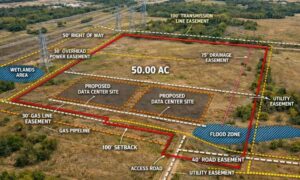
This is where an ALTA land title survey plays a unique role. Instead of focusing on vision or intent, it tests whether the land stands ready for development in its current legal state.
Developers use this survey early because it answers practical questions:
- Does the site function as a single, unified property?
- Do recorded conditions support the intended use?
- Do long-standing assumptions hold up under review?
By answering those questions upfront, teams avoid committing time and capital to sites that cannot move forward as planned.
Importantly, this step doesn’t slow progress. It protects it.
Transit Corridors Increase Complexity, Not Certainty
Transit investment often brings excitement. However, from a land perspective, it adds layers of review. Proposed corridors may introduce future controls. Access patterns may shift. Legal responsibilities may change over time.
Planning maps often show these corridors as clean lines. Yet real land records rarely match that simplicity. Because of this mismatch, transit-area parcels face more scrutiny, not less.
Early land verification becomes essential. It helps teams understand how public plans and private rights intersect before designs lock in.
Where Redevelopment Projects Quietly Fail
Many projects never fail publicly. Instead, they stall behind the scenes. Feasibility studies reveal conflicts. Investors hesitate. Lenders step back. The site never reaches the permit stage.
In many cases, the issue is not design or zoning. The issue is land readiness.
By verifying land conditions early, developers identify whether a site supports the concept—or whether it needs adjustment before moving forward.
From Vision to Execution in San Antonio
Local discussions around “Vacancy to Vitality” reflect a shared goal: turning underused land into productive space. That goal depends on more than good planning. It depends on legal clarity.
Survey-grade verification bridges that gap. It transforms public vision into private action. Without it, redevelopment remains theoretical.
What This Means for Developers and Investors
For anyone considering transit-area redevelopment, the lesson is clear:
Maps start the conversation. Surveys decide the outcome.
Before design, financing, or public announcements, developers benefit from understanding the land as it exists today—not as it appears on a planning overlay. That knowledge shapes smarter decisions and stronger projects.
Final Thoughts
The idea of 7,000 acres ready for redevelopment captures attention for good reason. San Antonio needs housing solutions that work. However, progress depends on accuracy, not optimism.
ALTA land title surveys don’t challenge redevelopment goals. Instead, they support them by confirming that projects stand on solid ground. When survey-grade reality replaces map-grade assumptions, redevelopment moves forward with confidence—and that’s how headlines turn into housing.